Understanding Brain Aging in Down Syndrome

Adults with Down syndrome are at increased risk of developing Alzheimer’s disease as they age, but not everyone will develop dementia.

The NJ Down Syndrome Aging Study aims to understand why some individuals remain cognitively resilient, while others become more vulnerable to cognitive decline. Through memory and thinking assessments, optional blood tests, and brain imaging, we hope to identify early signs of dementia risk and better understand healthy cognitive aging in adults with Down syndrome.

Why Is This Research Important?

Adults with Down syndrome are at increased risk of developing Alzheimer’s disease due to an extra copy of chromosome 21, which carries a gene involved in the production of amyloid-beta, a protein associated with Alzheimer’s disease.

However, despite similar underlying brain changes, individuals with Down syndrome can experience aging differently. Some remain cognitively stable for many years, while others develop dementia earlier. Understanding these differences may help identify factors associated with resilience and improve our ability to recognize those at greater risk for cognitive decline.

This knowledge is essential for developing better strategies to support healthy aging, improve clinical care, and guide future Alzheimer’s disease prevention and treatment efforts in the Down syndrome community.

What Are Our Goals?

Our goal is to improve the early identification of dementia risk in adults with Down syndrome and better understand why some individuals remain cognitively stable despite brain changes associated with Alzheimer’s disease.

By studying cognitive functioning alongside biological markers of Alzheimer’s disease, we hope to identify measures that can detect changes earlier in the disease process. This research may help improve future clinical trials and contribute to strategies that promote healthy cognitive aging and support prevention efforts whenever possible.
Specific Objectives

• Recruit adults with Down syndrome from diverse communities throughout New Jersey.

• Examine how differences in memory, thinking abilities, and other cognitive functions relate to biomarkers associated with Alzheimer’s disease.

• Identify factors that may contribute to cognitive resilience and healthy aging in individuals with Down syndrome.

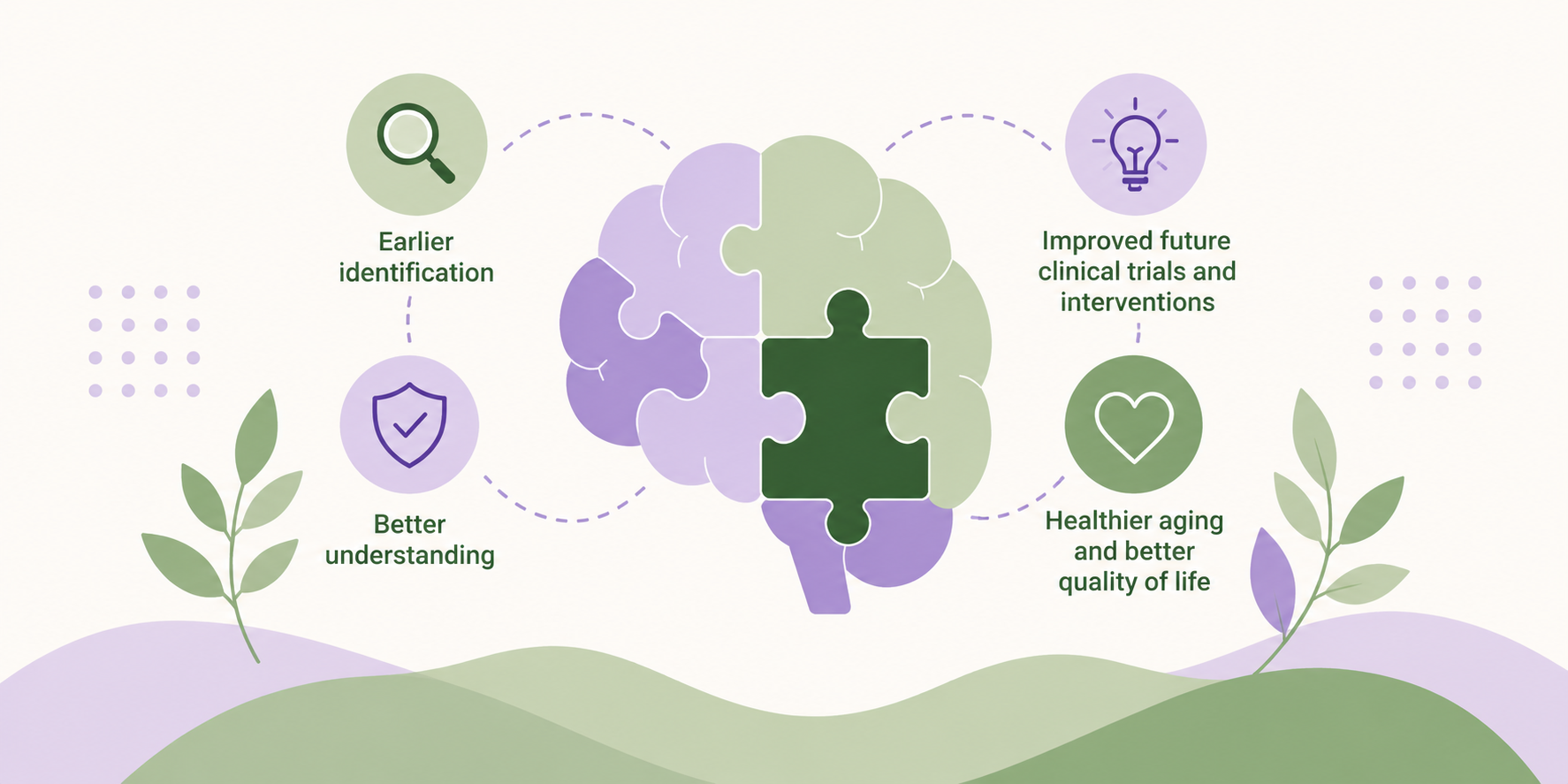
• Generate knowledge that may support future clinical trials and interventions aimed at improving brain health and quality of life.

How Will This Research Help?

Findings from this study may improve our understanding of how Alzheimer’s disease develops in adults with Down syndrome and why some individuals remain cognitively resilient despite age-related brain changes.

This research has the potential to contribute to earlier identification of dementia risk, support the development of targeted interventions, and ultimately improve the health and well-being of individuals with Down syndrome and their families.